


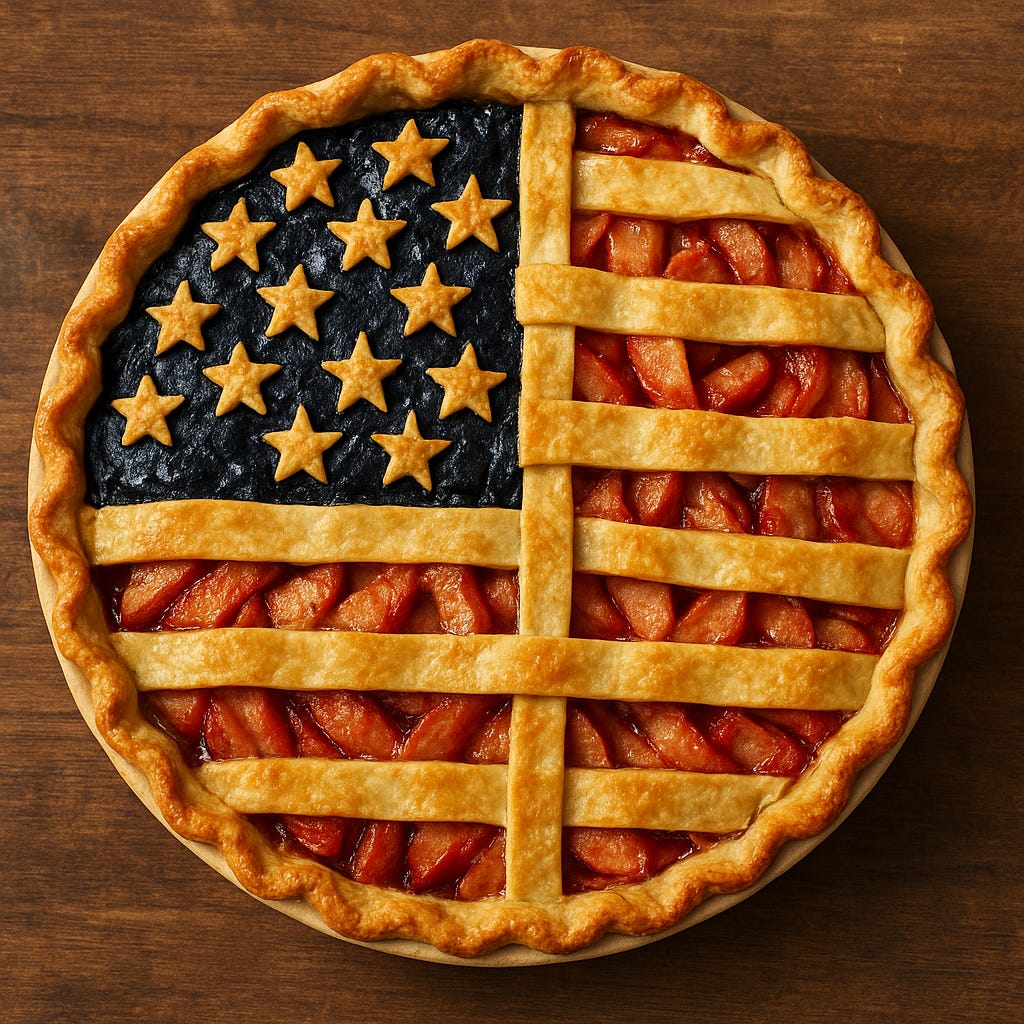
It seems obligatory for any writing about apple pie to begin with the phrase “as American as apple pie” so that’s where I’m going to start. But is it really that American?
According to the Executive Director of the American Pie Council (yes that’s a thing):
“When you say that something is “as American as apple pie,” what you’re really saying is that the item came to this country from elsewhere and was transformed into a distinctly American experience.”
Apples are not native to America, or even Europe, originally growing in Asia before spreading to the rest of the world. European settlers brought apple seeds and their local pie traditions to America, where they really took off.
And given modern America has flourished because of its melting pot of cultures and cuisines, I guess it makes sense that the apple pie should become the poster child for American food.
But how did we get here?
Humble Pie
The origins of pies are fairly well documented, starting first in Europe as a way to cook meat, vegetables or fruit in an oven without using a dish or pot. Dough is very similar to clay and was originally used as a cheaper and easier alternative.
The earliest surviving pie recipe is from my native England in about 1390. The recipe calls for pears, figs, raisins and spices all to be baked together in a pastry ‘cofyn’ (coffin) which was discarded before eating.
Slowly as cooking technology improved, the pastry case became a decorative element that made its way to the table.
So by the time the first European settlers reached America, pies were well established in the form that we’d recognise today. But apples weren’t quite.
Apple of America’s eye
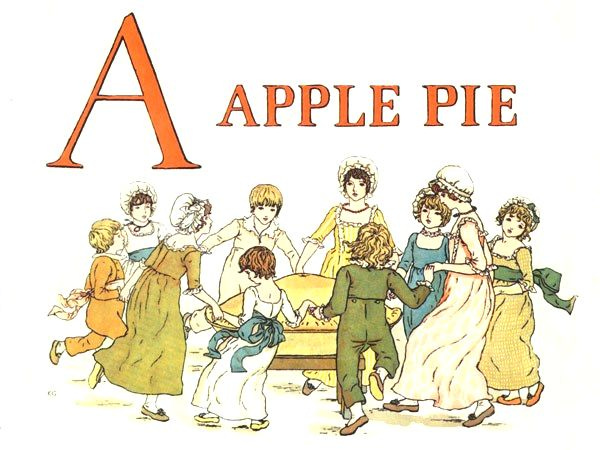
The only native apples in America are crab apples, so the first colonists had to bring their own seeds and grow their own fruit. This took a few years and at first the fruit was used to make cider, which was safer to drink than water. We commonly think of beer being the slightly alcoholic drink of choice when water is carrying all kids of (thankfully) old-fashioned bugs, but cider was actually much easier to produce in early colonies.
In the early 1700s the colonies started to become prosperous. They finally had disposable income to spend on imports, which they used to buy English goods. And they weren’t just buying food, they also bought kitchenware (also the first thing I buy when given the chance, so I can see where they’re coming from). They now had the dishes necessary to bake pies.
By the late 1700s, America and Britain were at war. Americans were moving away from typically British foods, which could have included apple pie, but instead it became a symbol of American culture. The English communities weren’t the only ones making pie - Dutch settlers also made lattice topped apple pies and most European nations would have had an apple pie tradition. Perhaps this shared pie heritage helped apple pie feel more than just British.
After the war, Americans wanted their food to reflect their principles: honest, simple and resilient. Apple pie fit the mould perfectly, no matter where your family originally came from.
The Apple Polisher
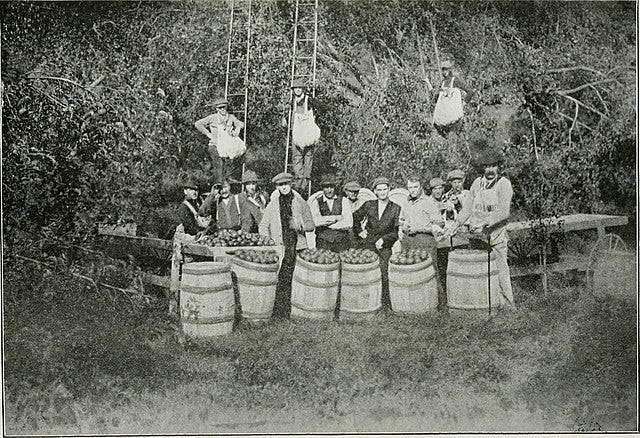
At the start of the 19th century, one man was responsible for a significant increase in apple trees. John Chapman (also known as Johnny Appleseed) travelled around, planting apple trees in areas where he thought people would soon settle. He’d buy cheap land, create an orchard and then sell shares of the trees to new local farmers.
He might have been viewed as entrepreneurial by modern standards, but he was also pretty eccentric. He was a vegetarian (almost unheard of at the time), never wore shoes and constantly had a pot on his head. But he was just odd enough to be seen as a friendly kook rather than dangerously insane. (It probably helped that he was, as we’d say these days, ‘creating value’).
But this is where most histories of apple pie often stop, jumping all the way to soldiers in WW2 commonly saying that they were fighting for “mom and apple pie”. Apple pie’s beginnings and end are well documented, but what about the middle - how did we get here?
Success comes with criticism, even for pie
As more trees were planted, apples became more abundant and could be used for things other than safe beverages and special occasion desserts.
By 1869 Harriest Beecher Stowe wrote in her novel Oldtown Folks:
“The pie is an English institution, which, planted on American soil, forthwith ran rampant, and burst forth into an untold variety of genera and species. Not merely the old traditional mince pie, but a thousand strictly American seedlings from that main stock, evinced the power of American housewives to adapt old institutions to new uses.”
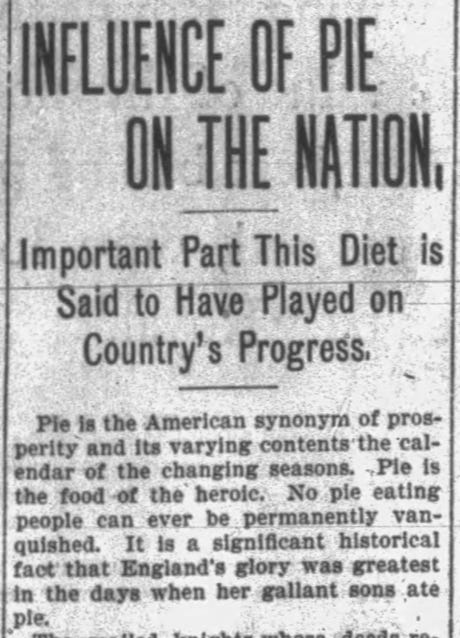
By 1902 the Buffalo Times claimed “pie is the American synonym of prosperity”, “the food of the heroic’ and “no pie eating people can ever be permanently vanquished”.
But here is where pie started to get some opponents.
Sarah Tyson Rorer, referred to as America’s first dietician, wrote articles such as “Why I oppose pies” and “Why I have no cakes and pies on my table” in the early 1900s, claiming that pies were indigestible and that while the individual ingredients were nutritious, the process of mixing them together made them “worse than useless”. But in an argument that I do agree with slightly more, she also thought that pies were bad because they require “wives, daughters and maids [to do] hours of fatiguing labor for which they get little credit.” (Instead of criticising pie though, I’d encourage a bit more gender equality among pie-makers.)
All of this hand-wringing shows that pie was clearly being eaten enough to be causing problems.
It became even more prevalent as the increasing number of German immigrants caused beer to be favoured over cider, before prohibition caused an even bigger drop off in cider consumption. Suddenly apple growers had to find a new way to market their product.
An apple a day keeps the doctor away
Much like apple pie, this famous phrase also doesn’t originate in the US. The earliest written record is from 1866 in Wales and was the slightly less catchy “Eat an apple on going to bed and you’ll keep the doctor from earning his bread.”
By 1887, the more familiar phrase “an apple a day keeps the doctor away” appeared in a newspaper article from Wrexham, Wales, complaining that too much foreign fruit was being imported to satisfy people’s demand for fruit thanks to the belief that it was good for you.
The American apple industry used the phrase to boost sales, and by 1896 the Chicago Tribune was complaining about fruit sellers blocking streets. Demand for apples was so high that fruit sellers were restricting traffic even setting up outside grocery stores. Concern about what was in food grew as people migrated into cities further away from their food production, so the slogan came at the perfect time to capitalise on the demand for healthy, recognisable products.
In 1936 The Atlantic ran an article entitled “An Apple a Day” written by Della Lutes which, as well as being a charming read, illustrates attitudes towards pie. She talks about her family’s apple orchard in Southern Michigan and how her mother makes apple pies with considerable skill and instinct. Her mother serves one for lunch with a hunk of cheese, before telling the family that they aren’t getting a pie the following day, as it’s wash day and she won’t have time to make pie. Her father (who eats more than half of the pie himself, leaving only 1/3 for the rest of the family) is horrified, and insists that she will make one the following day, ignoring the time it would take.
Pies were already seen as hard to make, time consuming but delicious. Della’s father would likely have been part of the generation of men who’d shortly be fighting in WW2, missing home and their families which by now had become synonymous with pie.
As easy as (buying) pie
But pie is falling out of favour. These days making one isn’t considered ‘as easy as pie’, with our food preferences tending much more towards convenience and paying other people to do things for us. I’d make an apple crumble for a special occasion, but never a pie.
But luckily grocery stores, restaurants and even fast food chains have our backs. Americans spend approximately $2bn a year on pies in grocery stores alone each year (that figure doesn’t include any pies served in restaurants or sold in bakeries). Apple pie was the first dessert added to the McDonald’s menu in 1968, although it didn’t contain real butter until a reformulation in 2018 (but I’m sure has been responsible for millions of scalded tongues over the years whatever the recipe).
In an age where consumerism has taken over everything, maybe it’s fitting that most apple pies are bought these days. But if we want to get off our phones and start fostering community, instead of ‘touching grass’ maybe we’d be better served by getting into the kitchen and touching some butter and flour to make pastry, bake a pie and share it with our loved ones.
Maybe apple pie isn’t as central to our diets as it once was, but it still has something to teach us. To slow down, to make something with our hands, to gather people we love around a table. If we take those lessons to heart, then apple pie will remain a symbol of what American culture can be at its best.
